Ding Wei Year Day Master Reading: A Structured Reference
A structured BaZi reading of the Ding Wei year: what it means, how it interacts with your day master, and why it is not a fixed prediction.
The phrase Ding Wei day master forecast refers to 'the day-master outlook for a Ding Wei year.' It is a common way to ask what a specific year may bring, but in BaziPilot we treat it as a structured reading path rather than a promise. This article explains the elemental composition of 丁未, how it relates to the ten day masters, and why the same year can feel different depending on your chart.
What Is a Ding Wei Year?
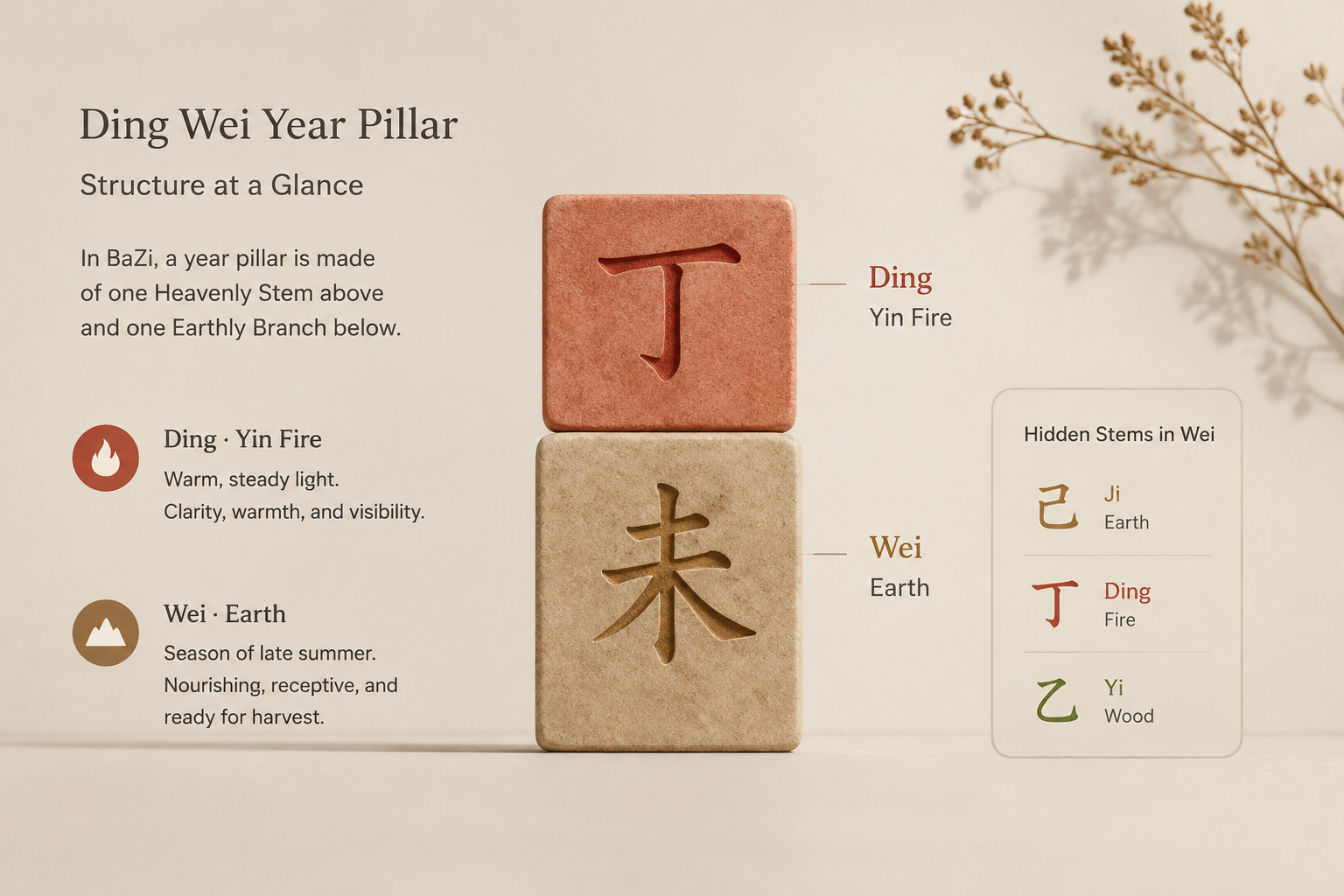
In the Chinese sexagenary cycle, a year is named by one heavenly stem and one earthly branch. 丁 is the fourth heavenly stem. It is yin fire: the warm glow of a candle, a lamp, or a kiln that keeps its temperature steady. 未 is the eighth earthly branch. It is an earth branch associated with late summer, ripeness, and storage.
The branch 未 contains three hidden stems: 己 earth as the main energy, 丁 fire as the stored warmth, and 乙 wood as the inner root. This means the year 丁未 has a layered composition. On the surface, fire generates earth. Beneath the surface, wood still feeds the fire inside the soil. The overall voice is warm, grounded, and slow-building.
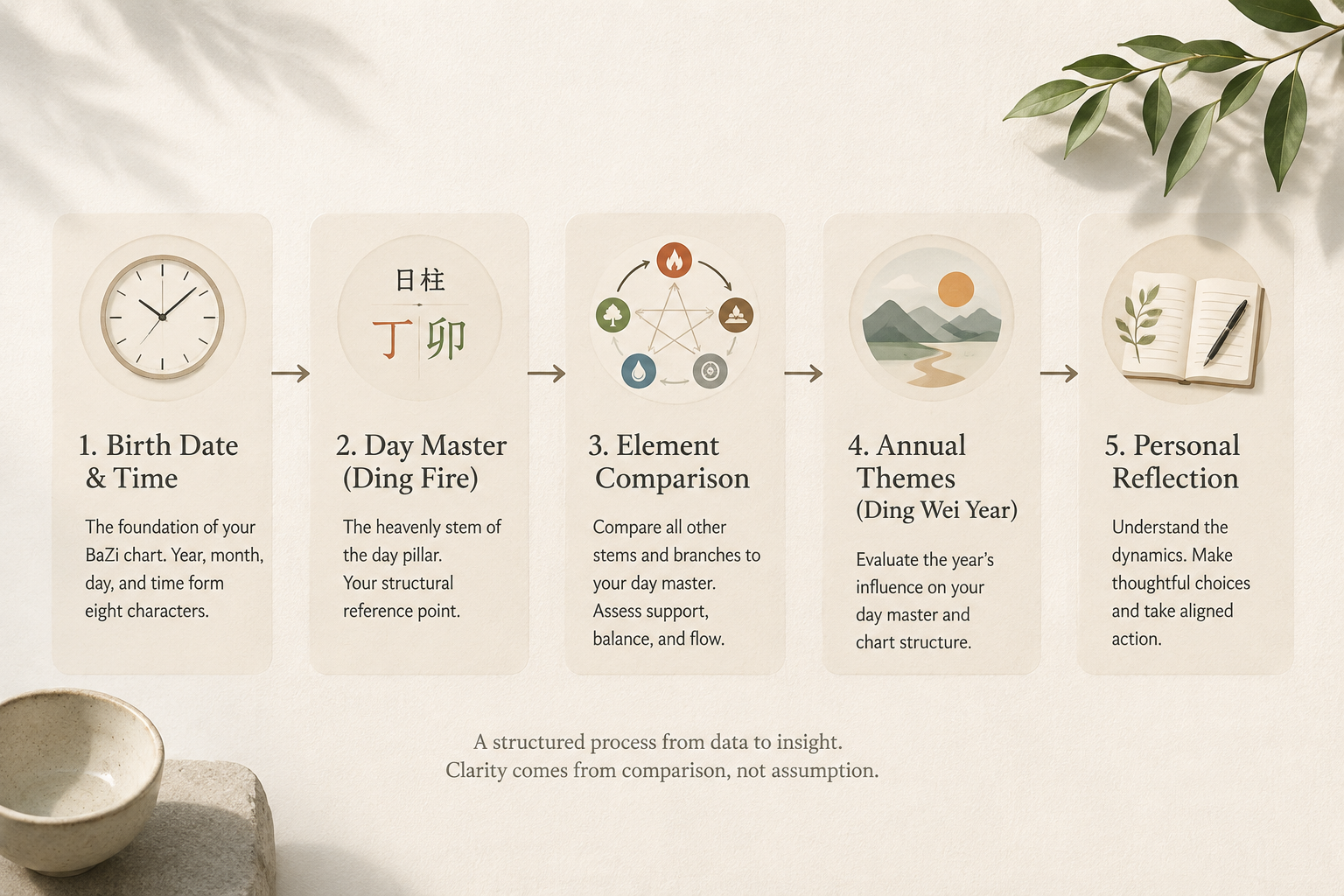
A year pillar is only one of four pillars. The complete BaZi chart includes the year, month, day, and hour pillars. The day master is the heavenly stem of the day pillar. When you ask about Ding Wei day master forecast, you are really asking how two different layers interact: the annual layer 丁未 and your personal day master. You can generate your chart with the BaziPilot Bazi Chart tool, or check the alternative calendar layer with the BaziPilot Huangli tool. The Huangli tool is descriptive, not prescriptive.
Start with Your Day Master
Your day master is the heavenly stem of the day pillar. For example, if your day pillar is 丁卯, your day master is 丁 fire. The day master is not a 'soul' or a fixed personality. It is a structural reference point that makes comparison possible.
In BaZi, every other stem and branch is read through its relationship to the day master. The Ten Gods system gives names to those relationships, such as resource, output, wealth, officer, and companion. These labels describe relational dynamics, not moral qualities. 'Wealth' points to the element that the day master controls; it does not guarantee financial gain.
The Elemental Dynamics of Ding Wei
The year 丁未 creates three movements:
- Fire generates earth. The visible stem 丁 fire feeds the branch 未 earth. This is an outgoing, supportive movement.
- Earth stores fire. The branch 未 contains a hidden 丁 fire, so the warmth is partly internal.
- Wood feeds the inner fire. The hidden 乙 wood inside 未 is the fuel for the hidden fire, which gives the year a self-renewing quality.
This is a cultural code for describing tendencies, not a physical law. The same code appears in seasonal and agricultural metaphors: late summer is when growth settles into fruit, and the soil stores what will be used later.
Reading Paths by Day-Master Element
The following are general thematic maps for each day-master element. They are not predictions. Use them as questions to bring to your own chart and life context.
Wood Day Masters (甲, 乙)
Wood feeds fire. For wood day masters, 丁 fire is an output energy. The year asks: what do you want to produce? Writing, teaching, speaking, and creating are all 'fire' activities. The 未 earth branch asks you to make that output practical. The main risk is scattering energy across too many projects.
Fire Day Masters (丙, 丁)
For fire day masters, 丁 is a companion energy. It feels familiar, but sameness can create friction. The 未 earth branch is the earth that fire produces, so the theme is workload and self-management. Because 未 hides fire inside earth, there is a tendency to overheat without showing it. Ask yourself: where do I need clearer boundaries?
Earth Day Masters (戊, 己)
Ding fire generates earth, so this is a resource year for earth day masters. The theme is learning, support, and nourishment. You might find it easier to receive help, study, or create stable routines. 未 is itself an earth branch, so the risk is over-accumulation. The discipline is to receive well and release what is no longer needed.
Metal Day Masters (庚, 辛)
Fire controls metal. For metal day masters, Ding fire is an authority or refining pressure, and it is supported by hidden fire in the branch. The theme is standards, review, and structure. You may face more oversight than usual, or you may put higher standards on yourself. The productive question is not 'how do I avoid pressure?' but 'how do I let pressure refine me?'
Water Day Masters (壬, 癸)
Fire is the wealth element for water, because water controls fire. In Ding Wei, fire is present in both the stem and the hidden stems of the branch. For water day masters, the theme is resource management: budgeting, pricing, negotiating, and deciding what deserves energy. It is not a 'money luck' promise. It is a question about how you spend what you have.
A Three-Step Reading Path for Your Own Chart
To move from general themes to a personal reading, try this three-step path.
- Generate your Bazi chart with the BaziPilot Bazi Chart tool to find your day master and the positions of all four pillars.
- Locate the Ding Wei year layer in your chart. Compare the year stem and branch to your day master using the Five Elements and Ten Gods relationships described above. Also check whether 未 appears elsewhere in your chart, because repetition strengthens a theme.
- Filter through your current luck pillar. Annual readings are weighted more by month and luck pillars than by the year pillar alone. If your current luck pillar supports your day master, the same annual theme may feel lighter; if it clashes, it may feel heavier.
What Not to Expect from a Ding Wei Year Reading
A method-driven reading should not guarantee a specific event, such as a promotion, marriage, or financial windfall. It should not tell you to avoid all decisions because 'the year is unlucky.' It should not claim that everyone with the same day master will have the same year. The year pillar is useful because it is simple, but simplicity is also its limit.
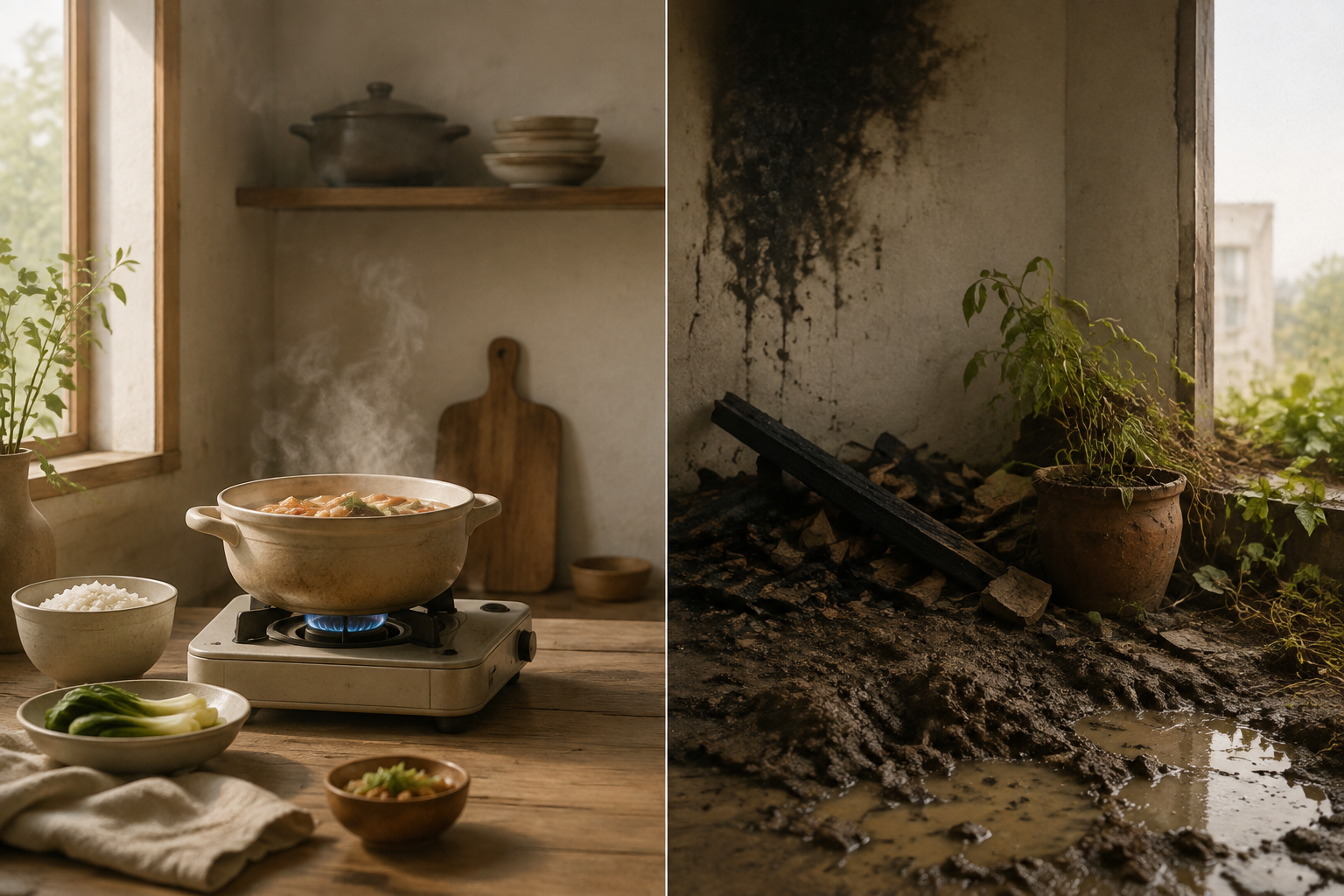
A calm reading treats Ding Wei day master forecast as a way of naming tendencies. The same fire can cook food or burn a house. The same earth can grow a garden or become mud. Your chart, choices, and environment decide which expression appears.
How to Use This Reading Responsibly
Keep the method transparent. When you read about Ding Wei day master forecast, treat the reading as a mirror, not a script. Look for evidence in your own experience before accepting a theme. Use the Huangli tool to observe daily stem-branch cycles, but do not treat single days as fatal or magical. If you work with a professional BaZi reader, ask them to explain the chain of reasoning from your chart to their conclusion.
Frequently Asked Questions
What does Ding Wei day master forecast mean?
It means 'the outlook for the day master in a Ding Wei year.' Your day master is the heavenly stem of your day pillar, and the phrase compares that stem with the year's stem and branch.
Is this a fortune prediction?
No. BaziPilot treats BaZi as a structured cultural reference and reading method. A year-pillar reading describes possible tendencies; it cannot know your choices, environment, or life circumstances.
Do all people with the same day master have the same year?
No. At least three factors change the reading: the other three pillars, the current luck pillar, and your actual decisions. Two people with the same day master can experience the same year very differently.
Should I use the year pillar alone to make major decisions?
No. A responsible BaZi reading considers the whole chart, and even then it is one source of information among many. Use it for reflection, not as a substitute for planning, budgeting, or professional advice.
Read Your Own Ding Wei Year
The most honest reading of Ding Wei day master forecast is one you can verify in your own life. Start by generating your BaziPilot Bazi Chart. Find your day master, check whether 未 appears in your chart, and compare it to the descriptions above. The result will not be a verdict. It will be a clearer vocabulary for the year you are already living.
Related reading
Related guide
2027 Ding Wei Year Outlook: Read the Fire Goat Year the BaZi Way
A grounded BaZi reading of the 2027 Ding Wei (Fire Goat) year. Learn what Ding and Wei mean, how the year interacts with your Day Master, and where the method stops short of prediction.
Related guide
Ding Chou Day Pillar: The Hidden Spark in Your Chart
Learn how the Ding Chou day pillar works in a BaZi chart: Ding Fire on Chou Earth, hidden stems, Ten Gods, reading steps, and honest limits.
Related guide
What Is a BaZi Chart? A Beginner's Guide to the Four Pillars
Learn what a BaZi chart is, how the Four Pillars work, what the Day Master means, and how to read your chart with a clear, methodology-based approach.